Justice for Rohingya Survivors – The Hague, Netherlands, January 2026
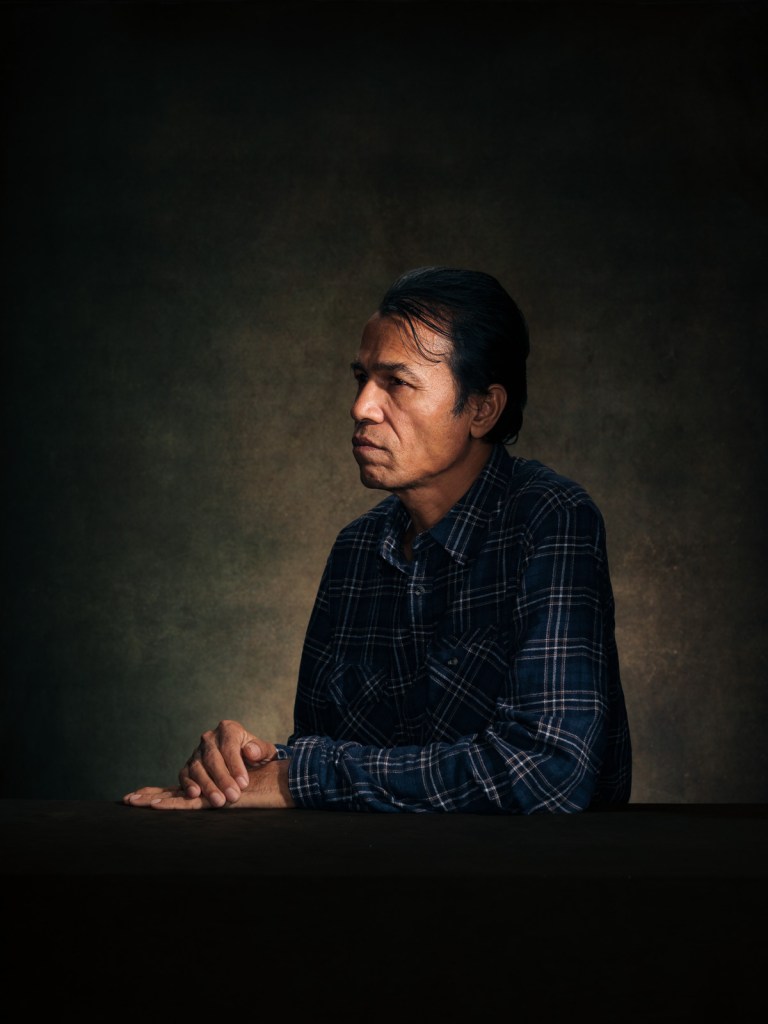
“After they arrested me, they tortured me, they tortured other people from my village and other villages – just for being Rohingya. They broke my fingers, they hit on them and on my legs with the butt of their guns. I still have scars on my legs and hands. They also punched me in the chest. They beat me so hard I thought I was going to die.” This harrowing testimony is from Yousuf, a survivor advocate who suffered serious human rights violations at the hands of the Myanmar military. He was forced to flee his homeland in Rakhine State, Myanmar to the Kutupalong Refugee Camp in Cox’s Bazar, where over 1.2 million Rohingya are currently displaced.
On 12 January 2026, the International Court of Justice (ICJ) commenced landmark hearings on the merits of the genocide case brought by The Gambia against Myanmar. This historic legal action seeks accountability for the atrocities committed during the 2017 ‘clearance operations’ in Rakhine State, a campaign of state-sponsored violence defined by mass killings, systemic sexual violence, and the deliberate arson of hundreds of villages. These acts, which the United Nations has described as having clear genocidal intent, forced over 720,000 Rohingya to flee to Bangladesh. As the ICJ deliberates on whether Myanmar breached the 1948 Genocide Convention, the case remains a critical pursuit of justice for the more than 1 million displaced people now seeking safety in Cox’s Bazar in neighbouring Bangladesh.
With the assistance of Legal Action Worldwide (LAW), Yousuf, along with other Rohingya survivor advocates, Salma, Monaira, and Sayedul, travelled from Cox’s Bazar, Bangladesh to the Hague, where they attended the historic hearings at the ICJ and advocated on behalf of their community.
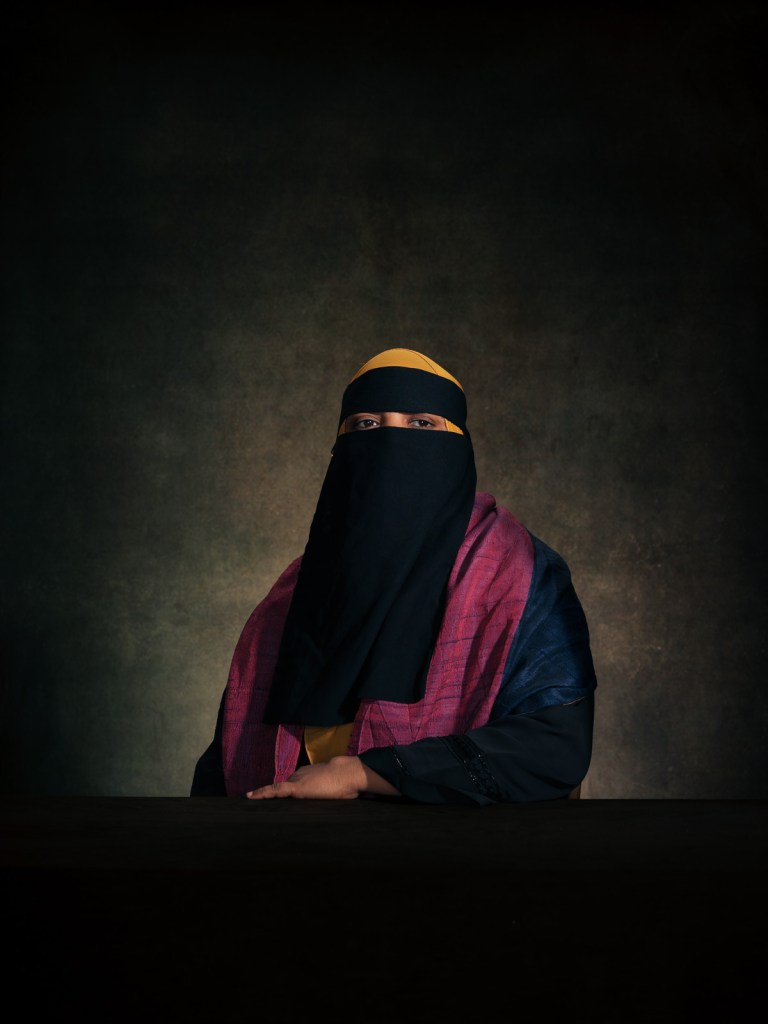
“In 2017, Rohingya people were brutally persecuted. Our families and children were taken, slaughtered, and shot dead. Even though I was a married woman, I was not spared from sexual abuse and torture. Boys, men, girls and women were raped. Young children were thrown into the fire. Our houses were burnt down. We saw dead bodies of our Rohingya people scattered around. Is there no one in the world who can give us justice?”
This powerful testimony is from Salma*, a survivor of sexual and gender-based crimes (SGBC) and other serious human rights violations. Salma is now a vital member of Shanti Mohila (‘Peace Women’), a grassroots network of 400 Rohingya women who provide a lifeline to their community. Through their courageous ‘door-to-door’ outreach, they deliver essential trauma counseling and legal education, empowering women to confront the intertwined threats of domestic violence, human trafficking, and mental health crises. As Salma puts it: “Back in Myanmar we did not have equality. Women also deserve to have equal rights, to seek justice, because they were also persecuted. With Shanti Mohila, we want to speak up together and to make our voices heard by the world”.
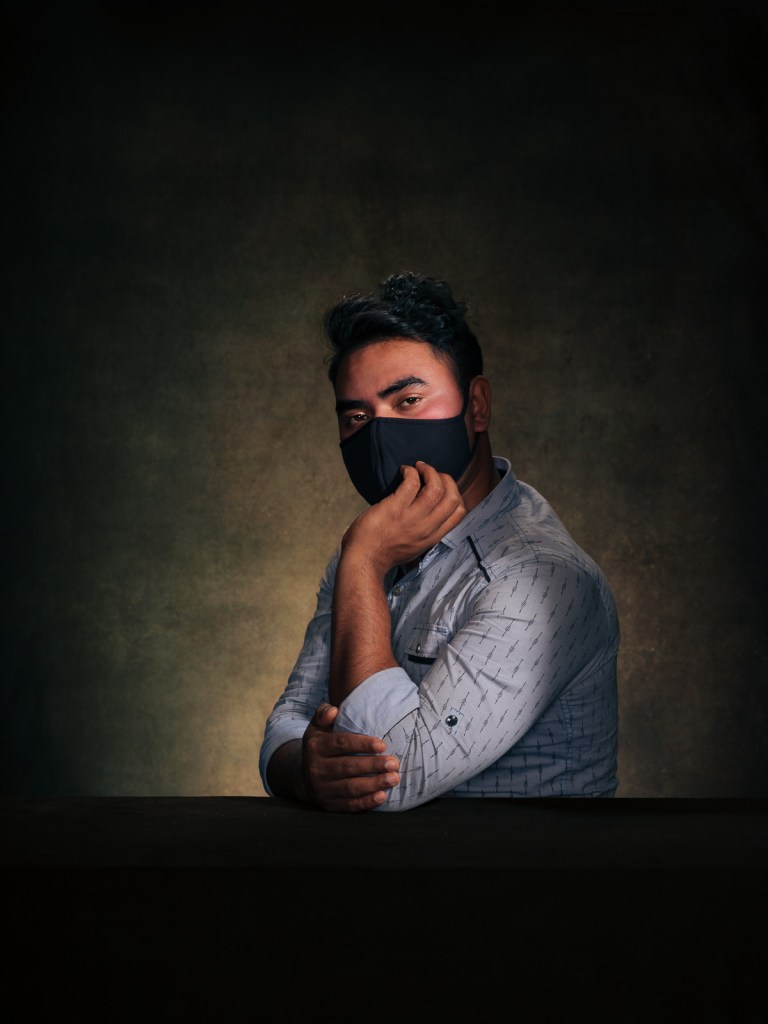
“The entire Rohingya community was affected. Hijra [third gender / transgender people] too were not spared because we looked different. We had to flee Myanmar to Bangladesh because of racial and religious discrimination.”
This testimony is from Monaira*, a member of the Hijra (third gender / transgender) community who like hundreds of thousands of fellow Rohingya were forced to flee their homeland in Rakhine State, Myanmar to the Kutupalong Refugee Camp in Cox’s Bazar, where over 1.2 million Rohingya are currently displaced. Today, Monaira works with Legal Action Worldwide (LAW) as a Hijra Survivor’s Advocate supporting fellow Hijra who often face intense social stigma.
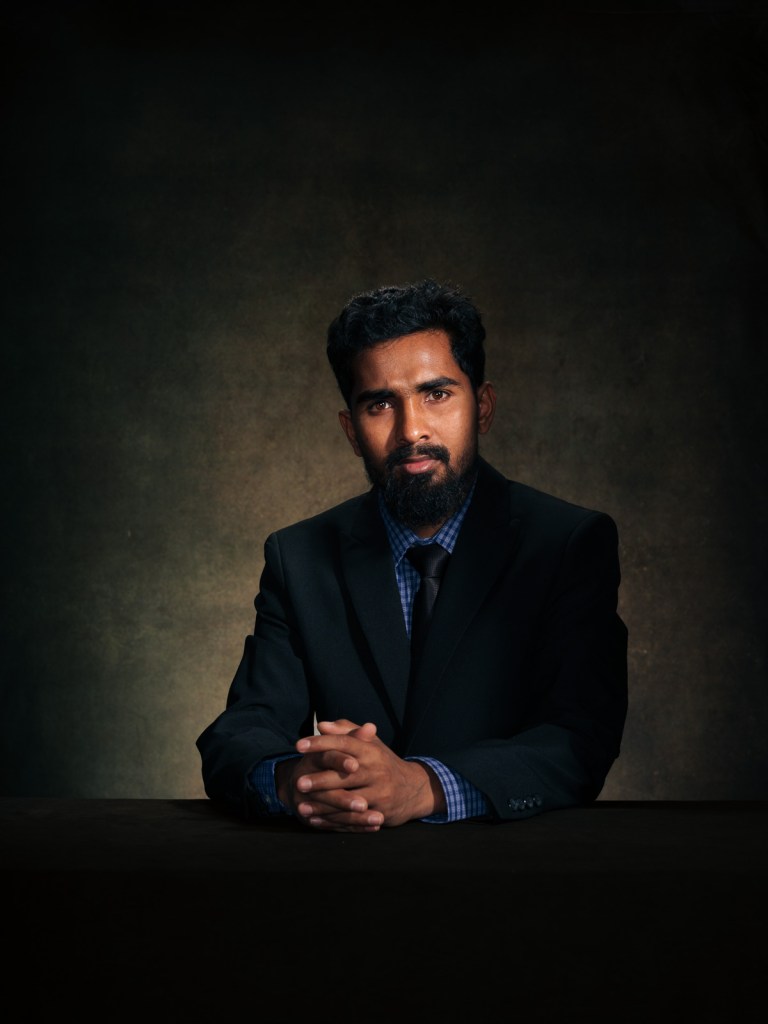
“I hope for a future in which the Rohingya people can live with dignity, safety, and equal rights in our homeland, supported by genuine guarantees of non-repetition. Justice must extend beyond accountability for past crimes; it must also restore our identity and citizenship. This includes the recognition of harm, reparations and restitution for victims, meaningful reconciliation, and the establishment of conditions that ensure such atrocities can never occur against us again.”
These words of hope come from Sayedul Karim, a survivor turned human rights leader who leads the Rohingya Justice Initiative (RJI). After being forcibly displaced by Myanmar’s military in 2017, he now spearheads efforts to document atrocities, bridging the gap between the refugee camps of Cox’s Bazar and the courtrooms of international justice.
I would like to extend my gratitude to Yousuf, Salma*, Monaira*, and Sayedul for taking the time to sit for a portrait. Special thanks to the team from Legal Action Worldwide (‘LAW’): Toni Trapani, Lucien Christen, Yuvraj Rathore and Maisha Farzana. Also thank you Julie Bardeche, and Benjie Aquino.
For more information regarding the Rohingya Crisis visit: Legal Action Worldwide
To watch Yousuf, Salma, and Monaira’s testimony, visit: “From Atrocities to Survival: Justice Journey of Rohingya Victims” | The ICJ Rohingya Genocide case
For more information about the Rohingya Justice Initiative (RJI) visit: https://therji.org/ and https://www.facebook.com/p/Rohingya-Justice-Initiative-61552809570178/
 D.S. Lim Photography