Zuid Holland, The Netherlands, 2025
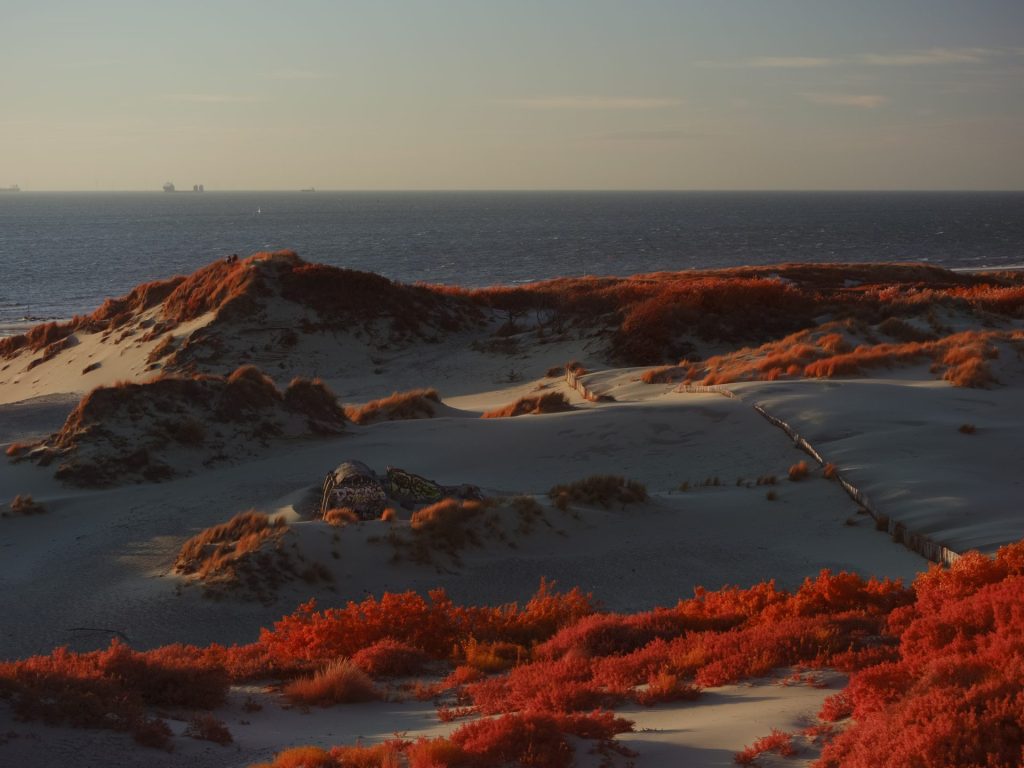
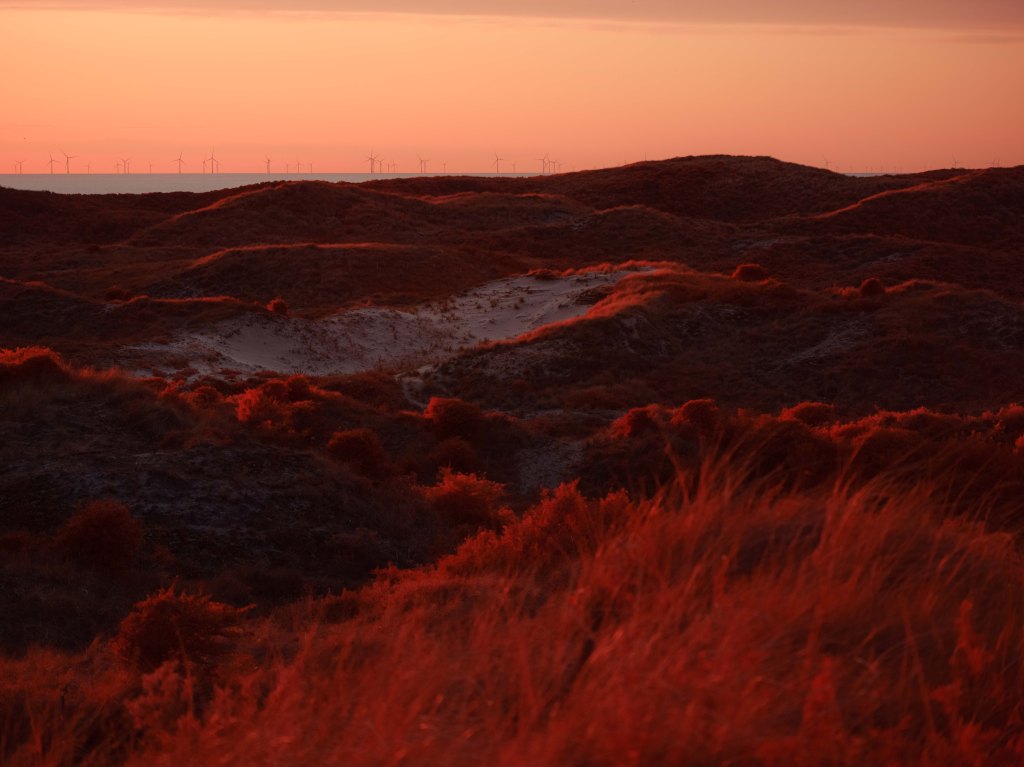
On 23 March 1942, the German Führer issued Directive No. 40, what followed was the one of the largest construction projects of the 20th century. Hitler’s order saw the creation of the ‘Atlantic Wall’ a 3,000-kilometre reinforced concrete fortification that ran the entirety of the North Sea Coast, all the way up to Scandinavia. The objective — to repel the impending Allied invasion. Despite almost eight decades since the end of World War II, the imposing bunkers remain, partially submerged amongst the white sandy dunes along the Dutch coastline. Today, the Dutch North Sea dunes face a different threat, dangerous storm surges and rising sea levels caused by accelerating human driven climate change.
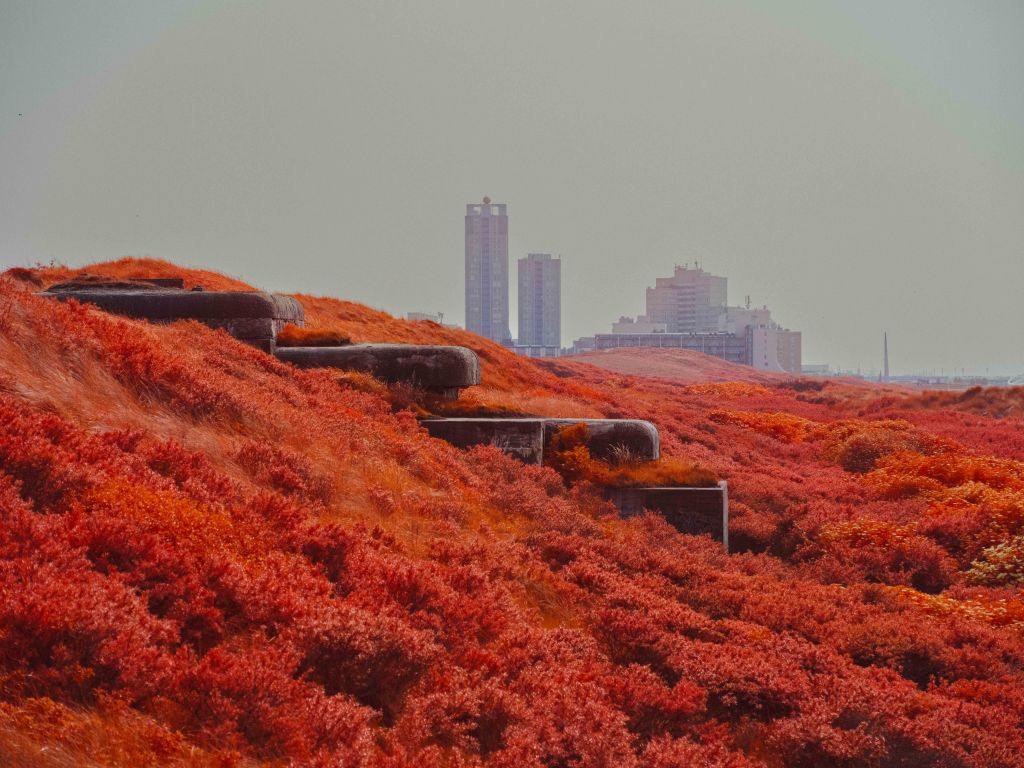
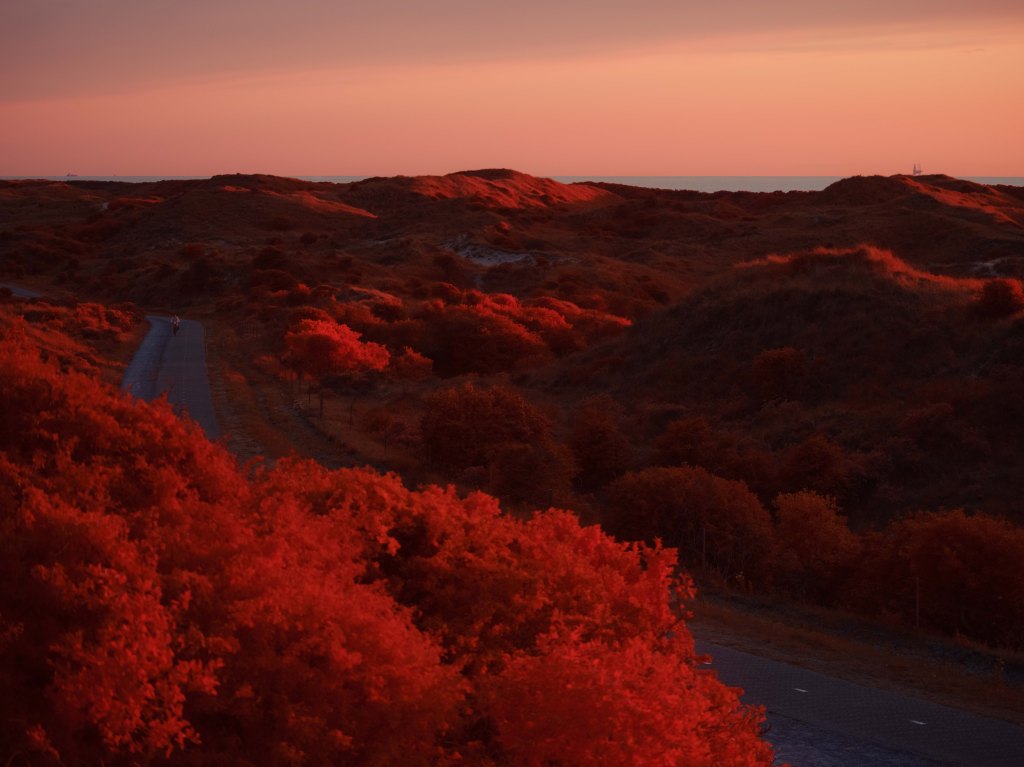
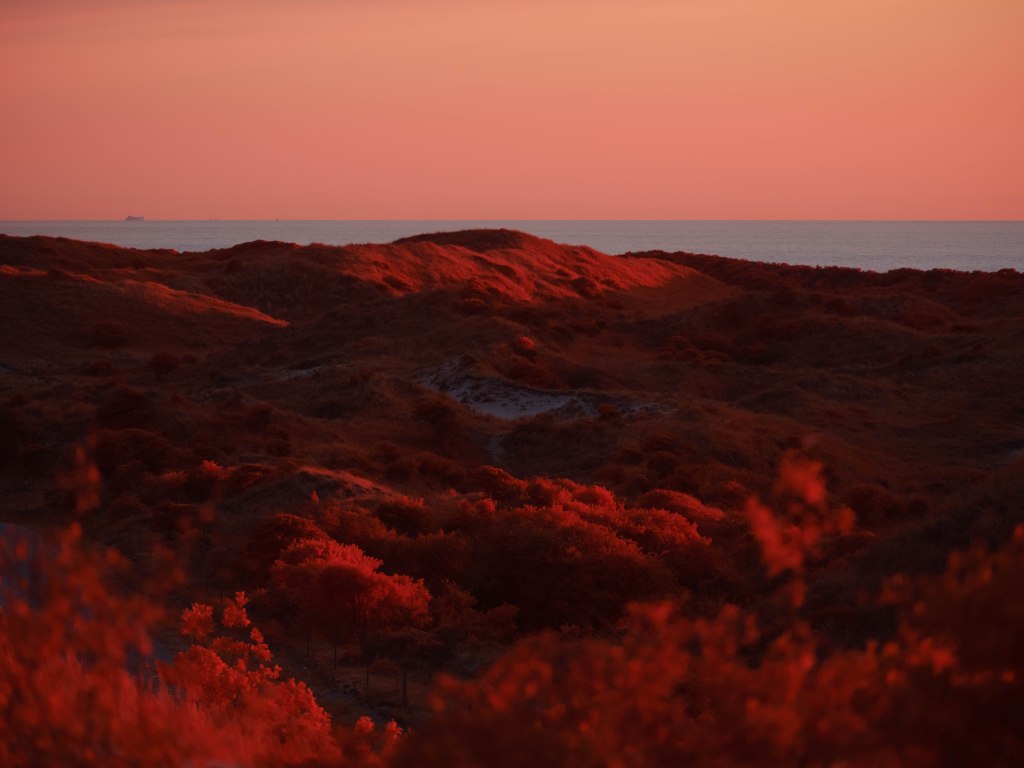
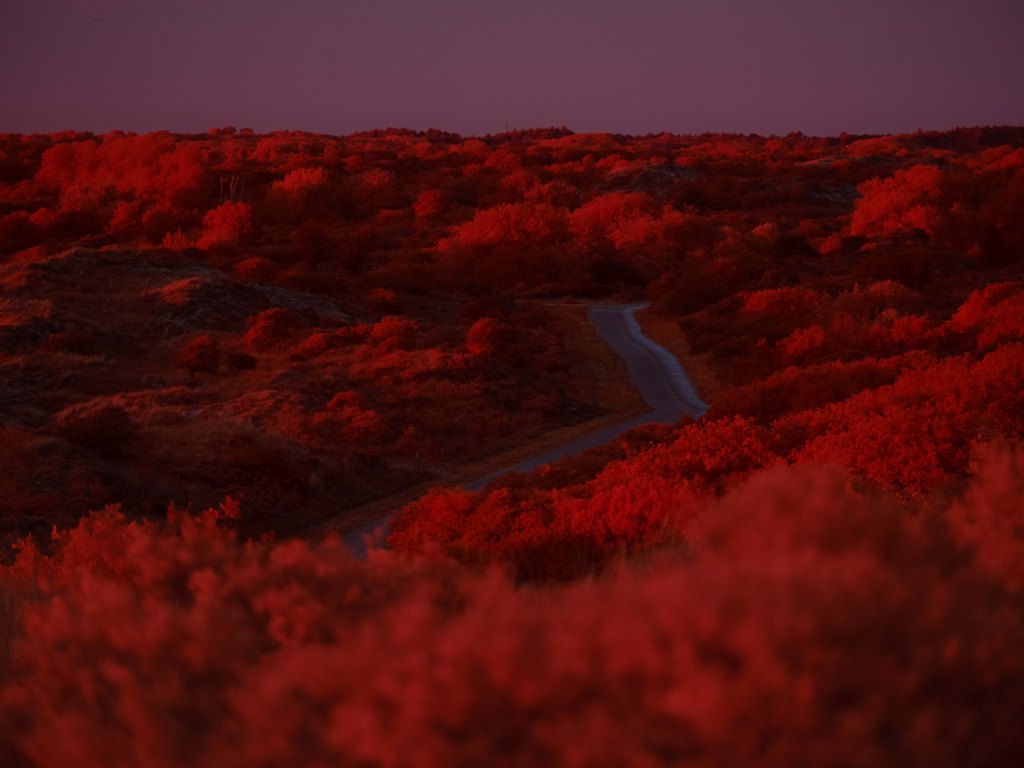
The above infrared image was taken from atop the decaying and long abandoned Nazi built ‘V143 “Mammut” Radar Bunker’ in Kijkduin, South Holland. This image taken on a Fujifilm GFX50s full spectrum converted camera with a Kolari IR Chrome (i.e., digital Kodak Aerochome) multiband filter attempts to reveal the multifaceted nature of the Dutch North Sea dunes. In the foreground in bright vibrant red hues are sea thistle and sea buckthorn bushes which stabilise the dune system minimising wind erosion. Towards the middle of the image is a partially submerged WWII era bunker, a painful reminder of Nazi occupation. Running diagonally across the image is a fence to control the movements of the many animals that live within the dunes. In the background rising as high as 20 metres are sand dunes covered in marram grass, serving as natural sea barriers — protecting as much as 30% of the landmass of the Netherlands which lies under sea level. In the far distance are oil tankers waiting to dock with the 150 or so oil and gas platforms in the Dutch North Sea — hulking reminders of a fossil-fuel economy whose emissions drive the climate crisis, bringing sea-level rise, stronger storms, pollution and the risk of spills that directly and indirectly threaten the fragile dune ecosystems that shield the low-lying coast. In contrast, the horizon also reveals faint silhouettes of the 500 offshore wind turbines which provide around 25% of the Netherlands’ clean energy.
Equipment: Fujifilm GFX50s (full spectrum conversion) with Kolari IR Chrome Filter and Breakthrough Circular Polarizer Filter, GF 100-200mm F5.6 R LM OIS WR.
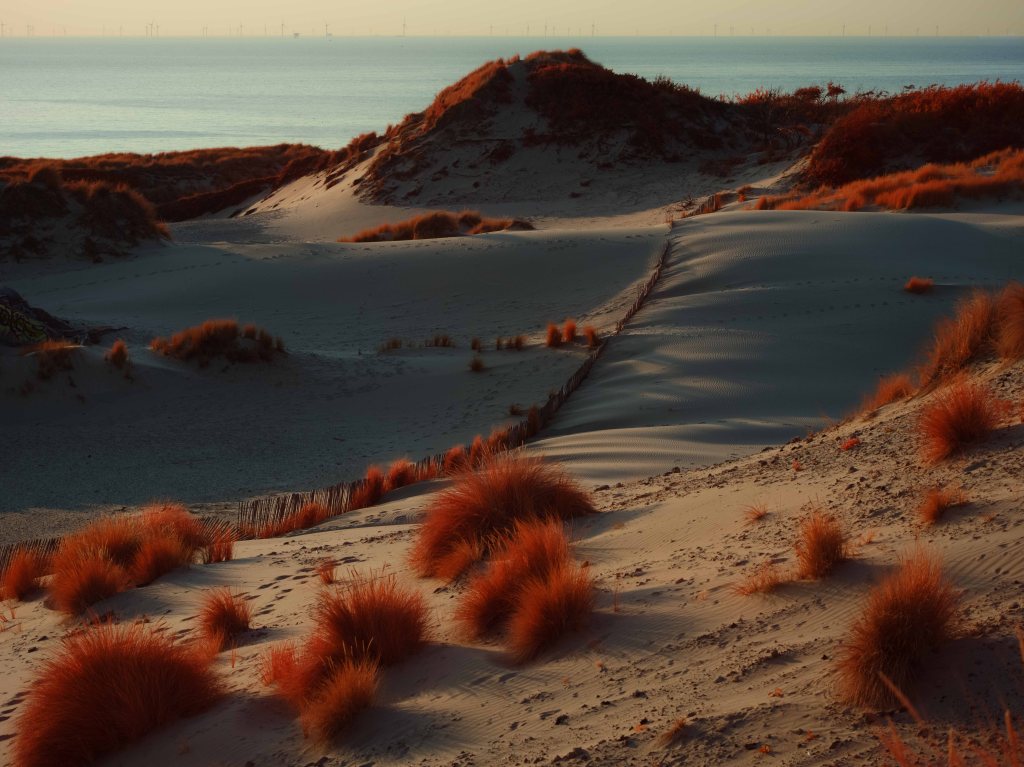
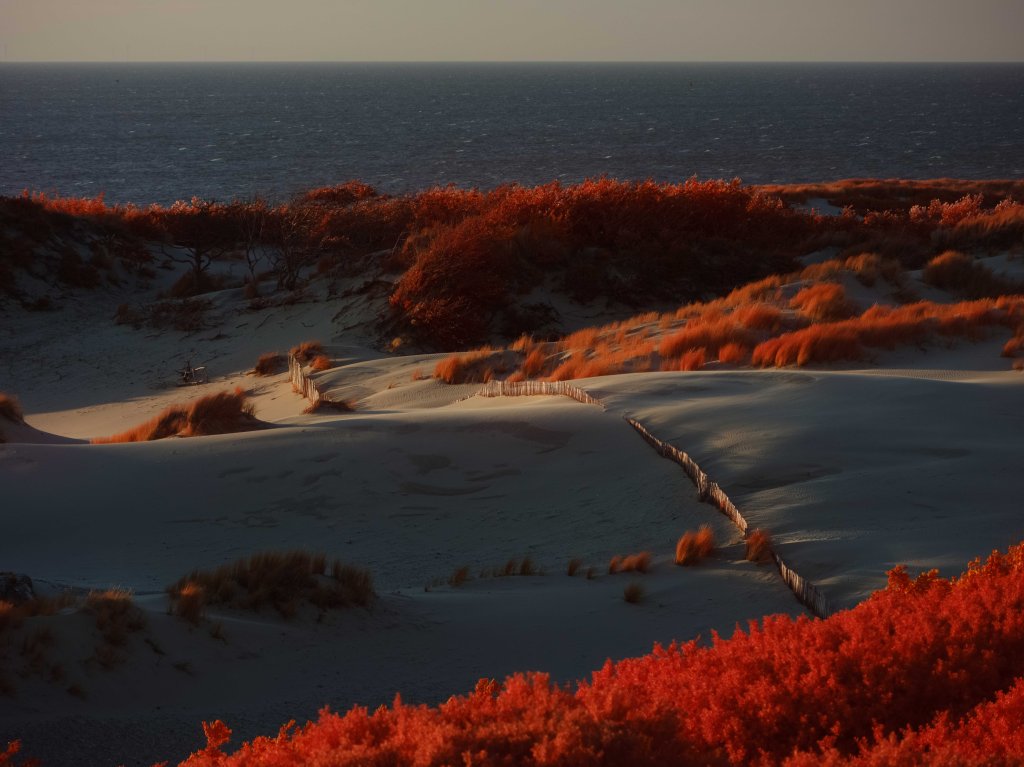
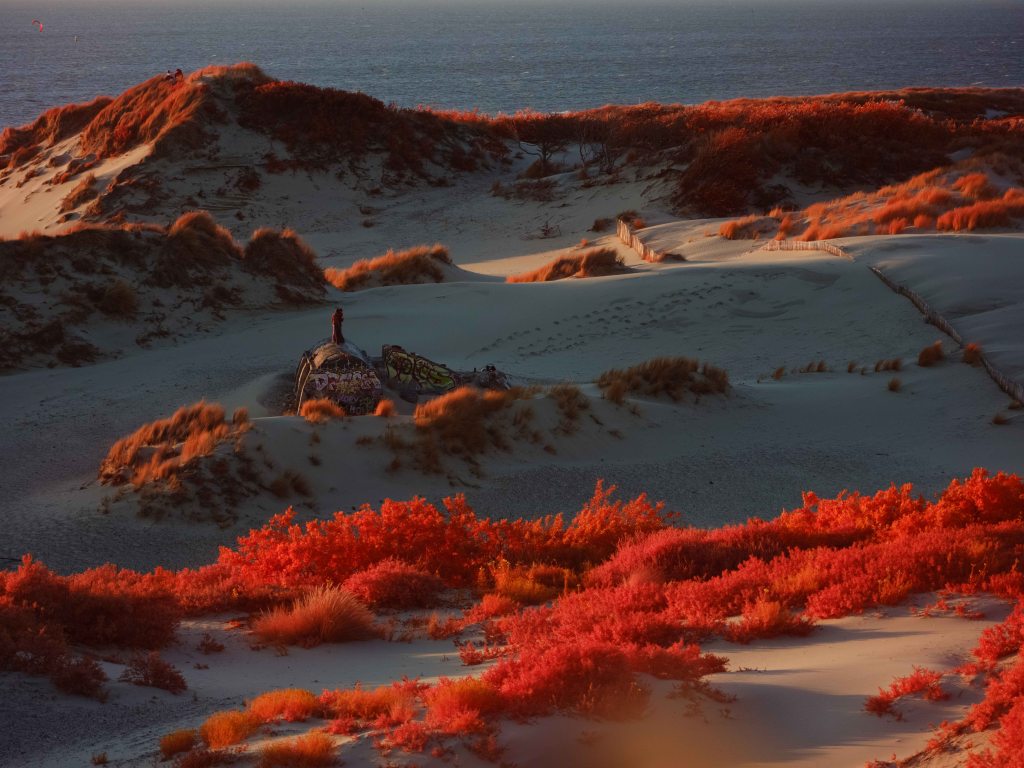
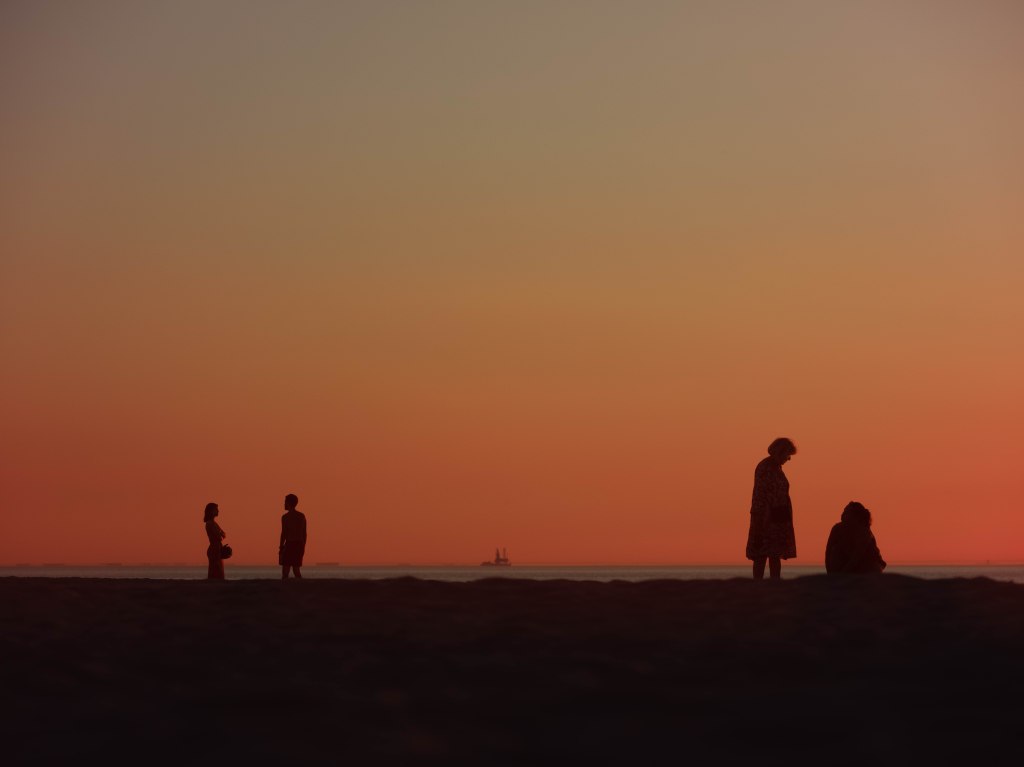
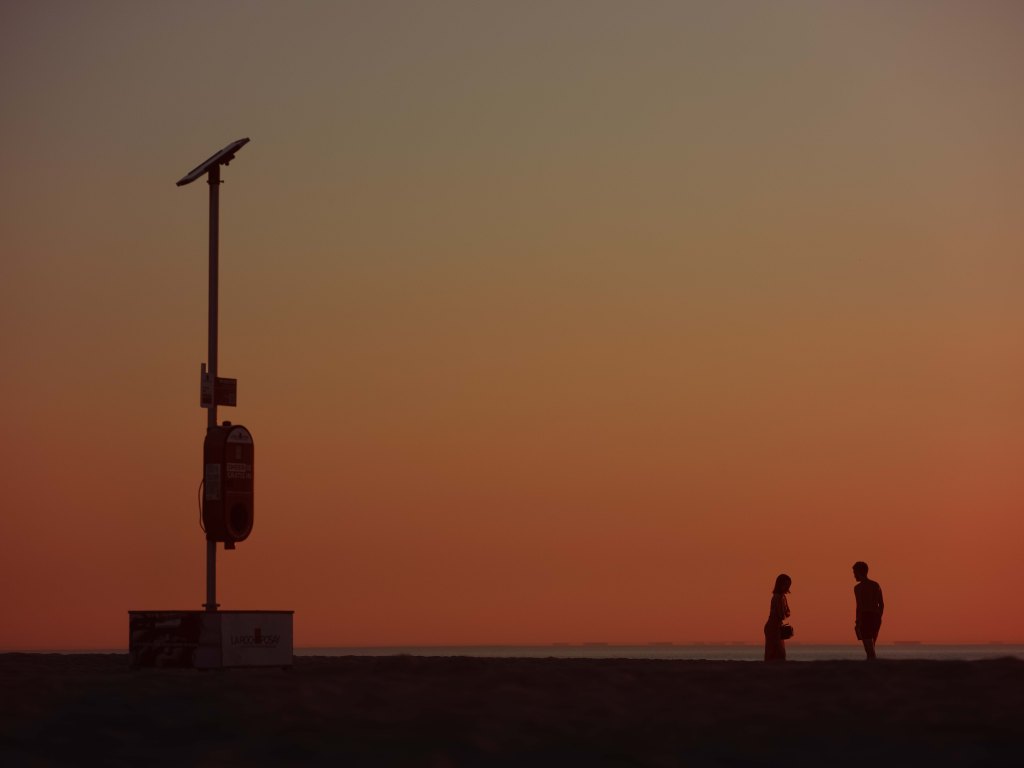
As the sun sets on a hot summer evening along the Dutch North Sea coast, two women form a stark contrast against the vibrant orange hued sky. Further down the beach, two young people share a moment, their silhouettes suggesting a quiet intimacy. In the far distance, the industrial outline of an offshore oilrig pierces the horizon, a modern counterpoint to the natural beauty. Kijkduin, Zuid Holland, June 2025.




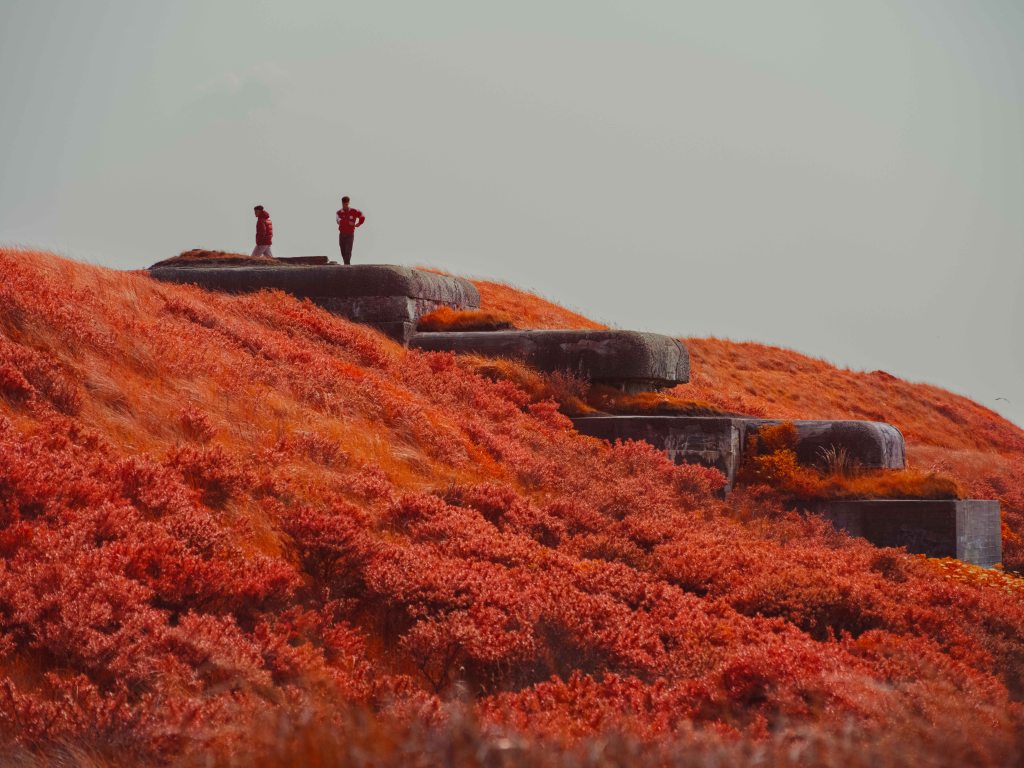
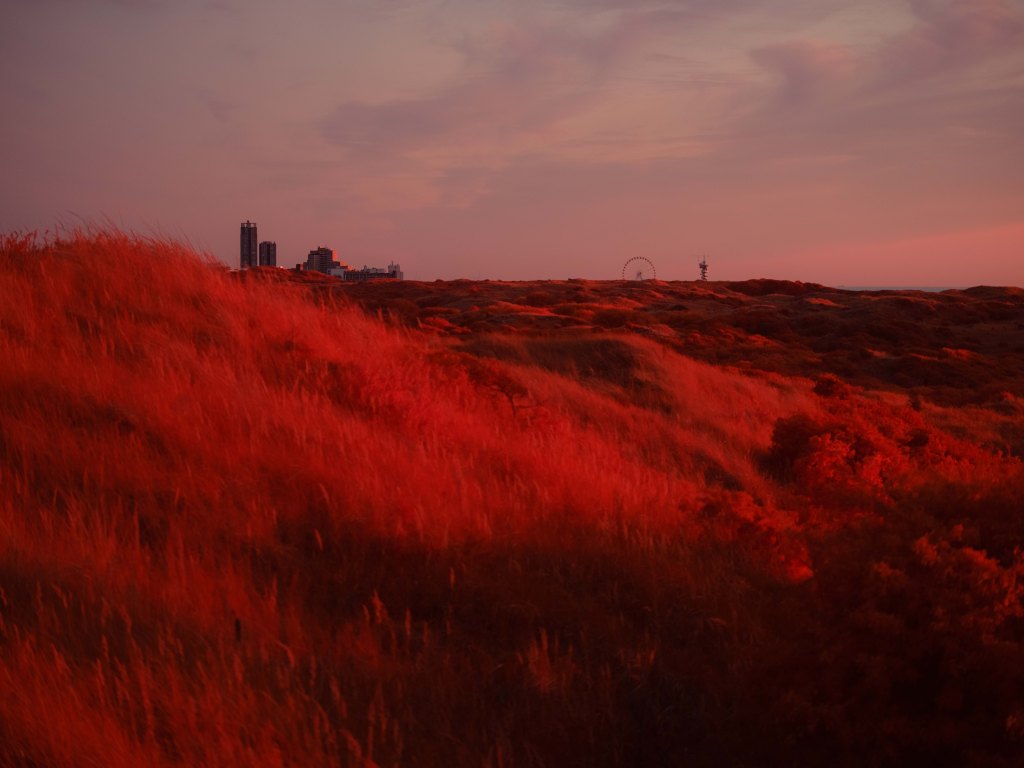
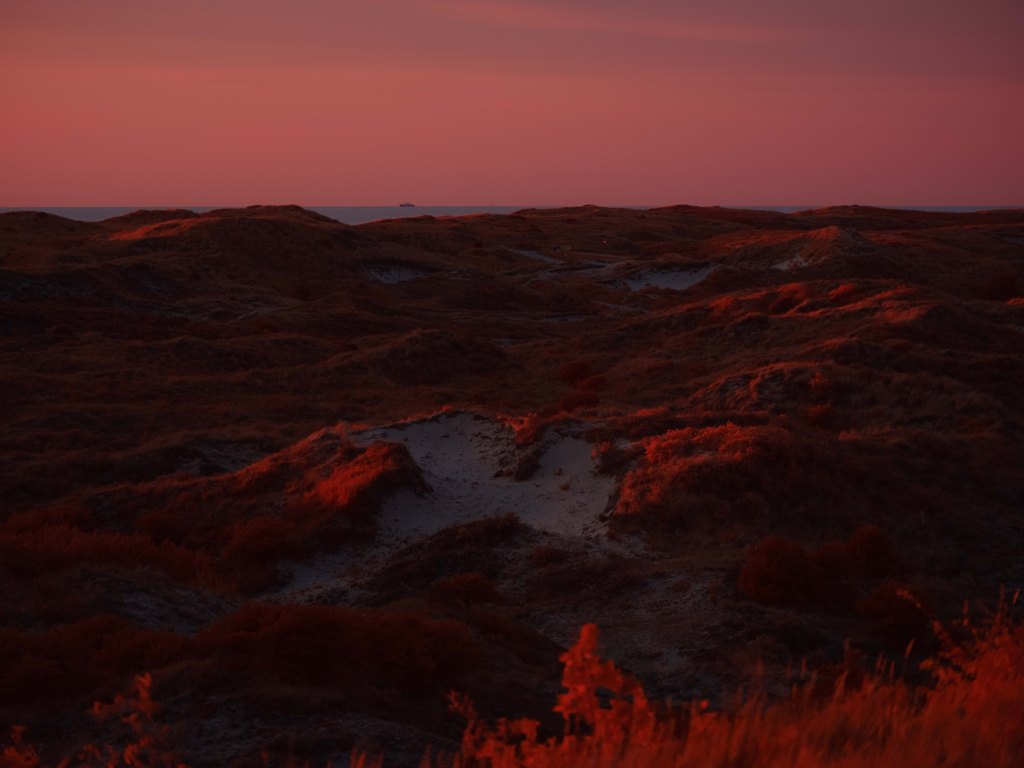
These coastal dunes were once part of the Nazi Atlantic Wall — a massive WWII defense line built to repel Allied invasions. Today, only remnants remain, hidden among the sand and marram grass. Scheveningen, Zuid Holland, May 2025.


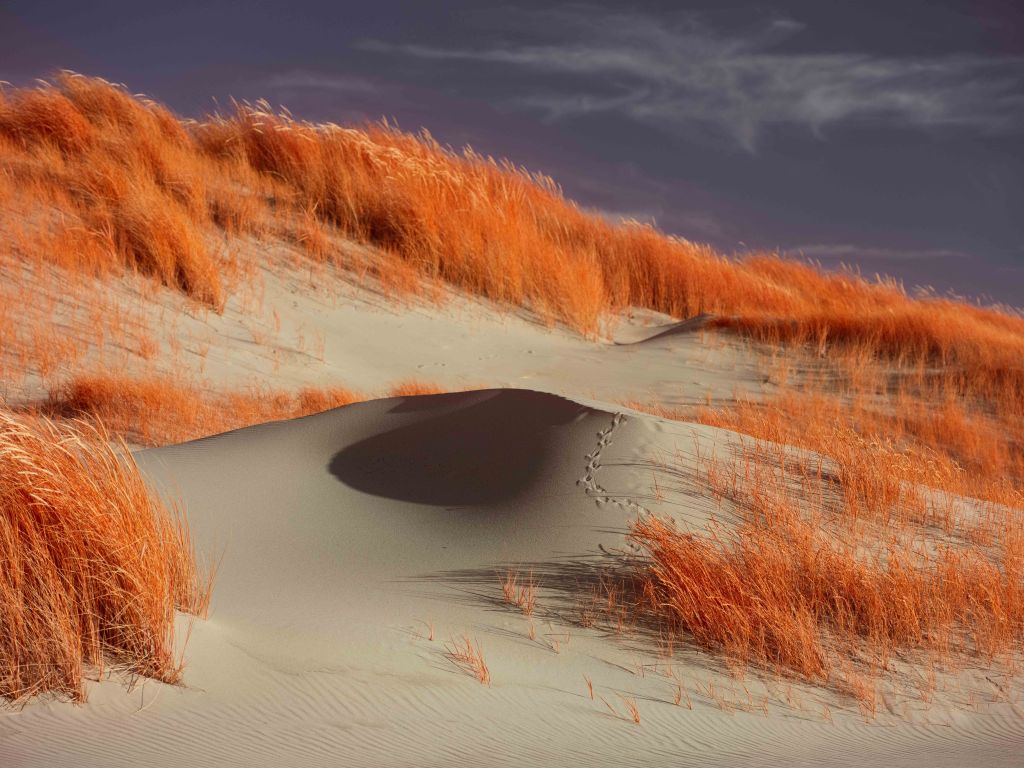

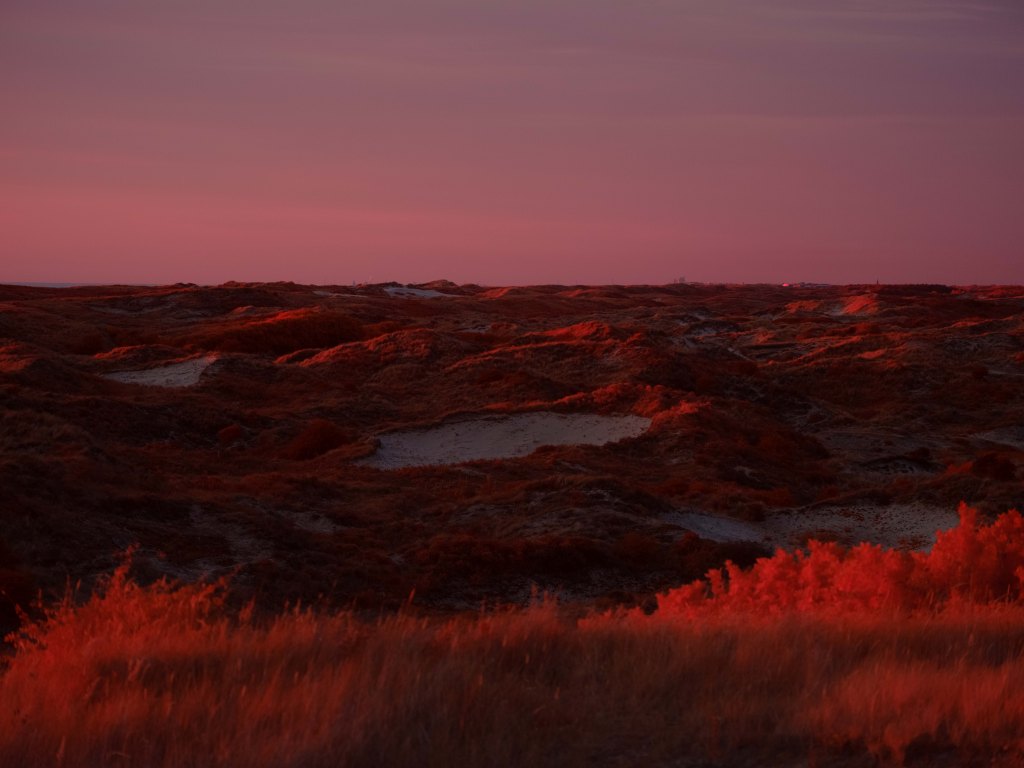
The terminal rays of light catching the crests of undulating dunes. Meijendel, Zuid Holland, July 2025.
© 2025 De Sheng Lim All Rights Reserved.
 D.S. Lim Photography